
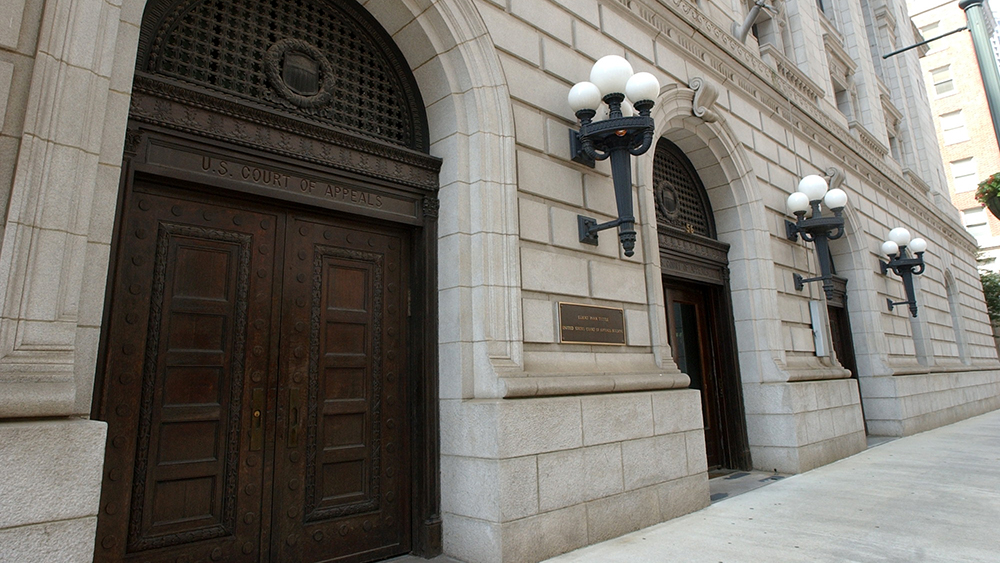
WASHINGTON, DC – Today, the U.S. Court of Appeals for the 11th Circuit reversed a lower court decision in NSBU v. U.S. Department of the Treasury, finding in favor of the Corporate Transparency Act (CTA). This landmark anti-money laundering law requires certain U.S. entities to provide basic identifying information to the Treasury Department about their true, or “beneficial”, owners.
“The Court’s decision confirms what Congress understood and intended when it originally passed this legislation: that anonymous companies are drivers of fraud, drug trafficking, and the threats posed by terrorists and transnational criminal organizations,” said Erica Hanichak, deputy director of the FACT Coalition. “Congress already gave our country’s law enforcement and national security officials the tools they need to address money laundering through shell and front companies. It’s long past time that we empower them to start using these tools to protect our communities.”
During the Court’s deliberation, several amici curiae (“friends of the court”) – including bipartisan Members of Congress, national security and anti-corruption experts, and tax law experts – filed briefs in support of the Government’s position that the CTA was constitutional. FACT and its partners also filed an amicus brief in the lower court case reversed by the 11th Circuit. The Court further cited the support of law enforcement, national security experts, and industry associations as influential in informing Congress’ findings that the abuse of anonymous U.S. shell companies impacts interstate commerce.
“Today’s decision by the 11th Circuit affirms what we’ve long known about the Corporate Transparency Act: establishing a beneficial ownership database is a constitutional use of Congress’s powers to provide effective tools to law enforcement in order to keep communities safe,” said Frank Russo, Director of the CPAC Center for Combating Human Trafficking. “We’re grateful that the Administration is defending the law in the courts. With full implementation of the statute, law enforcement, anti-human trafficking agencies, and national security experts can turn the tide in the fight against organized criminal organizations attempting to abuse the United States’s financial system for their own benefit.”
“Today’s ruling validates a critical tool that U.S. law enforcement has consistently requested in order to take down the money laundering networks fueling Mexican cartels, Chinese scam factories, and other criminals who threaten the safety and prosperity of all Americans,” added Nate Sibley, a fellow at Hudson Institute and director of Hudson’s Kleptocracy Initiative.
“America’s national security depends upon protecting the homeland against adversarial governments, drug cartels, and foreign terrorists,” said Josh Birenbaum, deputy director of the Foundation for Defense of Democracies’ Center on Economic and Financial Power. “But how can we defend against a threat we can’t see? For too long, the enemies of America have had easy tools to hide in plain sight, anonymously using American shell companies to do everything from buying up U.S. companies to laundering billions in fentanyl proceeds. We applaud the 11th Circuit for upholding the CTA and giving law enforcement the tools it needs to stop these dangerous, anonymous companies and the criminals who use them.”
This decision is final, subject to further appeal, which could include an en banc hearing by the entire 11th Circuit or appeal to the Supreme Court.
###
Notes to the Editor:
- Read the ruling by the 11th Circuit Court here.
- The 11th Circuit found that the CTA is a constitutional exercise of Congress’s power under the Commerce Clause, as it clearly regulates activity that is “economic in nature” and that Congress “reasonably concluded that failing to require businesses to report beneficial ownership information would undercut its goal of regulating interstate financial crime.”
- Further, the Court held that the CTA, as a “uniform and limited reporting requirement”, does not violate the 4th Amendment protections. It adds that there is “nothing arbitrary or discretionary about its application.”
- See a summary of the amicus briefs filed in favor of the government’s positions defending the statute here.
- FACT’s policy director Zorka Milin has criticized the district court decision in a Bloomberg Law editorial.
- While today’s decision serves as a legal validation of the CTA as originally enacted by Congress, the Administration should reconsider and reverse its disastrous and unlawful decision to limit the application of reporting requirements under the law only to foreign companies, in contravention of the clear intent of Congress.