
Final Rule Dismantling Corporate Transparency Act Sides with Fentanyl Pushers, Human Traffickers, Fraudsters, and Tax Cheats
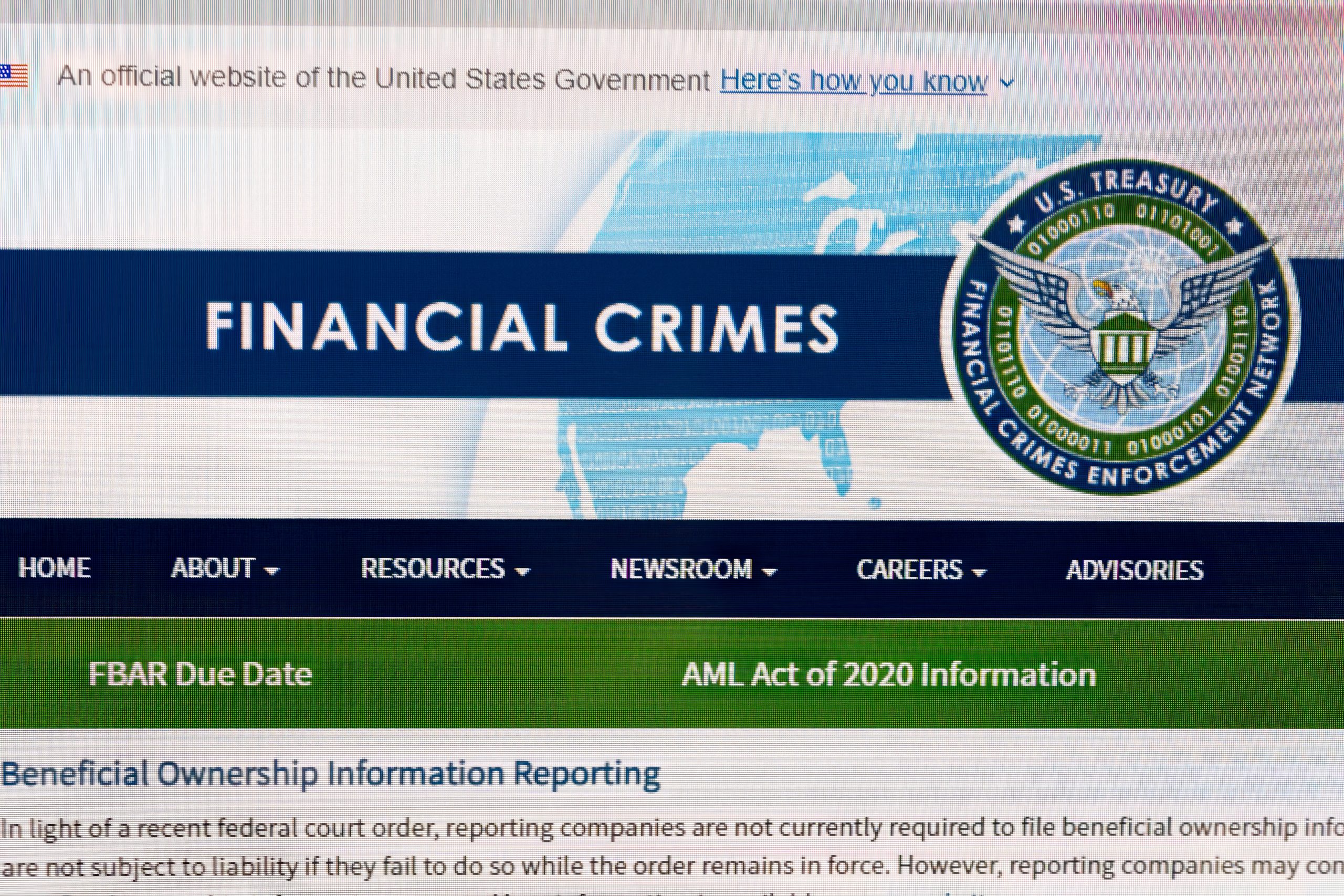
WASHINGTON, DC – Today, the Financial Crimes Enforcement Network (FinCEN) issued a final rule exempting U.S. companies and individuals from the Corporate Transparency Act (CTA), a landmark anti-money laundering law that requires certain entities to provide basic identifying information to FinCEN about their true owners. The new rule makes permanent a March 2025 interim rule that exempted nearly all entities from reporting their true ownership information under the statute enacted during the first Trump administration. It also commits to deleting information previously reported by U.S. companies and individuals that are no longer required to report.
“This final rule keeps the floodgates open for criminals to launder money through U.S. shell and front companies,” said Erica Hanichak, co-director of the FACT Coalition. “By failing to fulfill Congress’ mandate for greater financial integrity, the Treasury Department has handed a major victory to U.S. adversaries, corrupt officials, fraudsters, and tax evaders who use our financial system to move and hide illicit wealth.”
“Law enforcement needs financial tools to investigate and stop criminal networks operating in the shadows,” said Frank Russo, senior policy advisor at CPAC and partner at Modern Fortis, a public safety strategic advocacy firm. “The underlying transparency law is still valuable, but Treasury‘s rule has failed to strike the appropriate balance in implementing it, crippling public safety officers’ ability to protect and serve their communities.”
The final rule disregards more than a decade of evidence Congress has built on the difficulties law enforcement faces investigating crimes enabled by opaque networks of U.S. shell companies. Similarly, recent analysis from the Government Accountability Office, a nonpartisan federal auditor, concluded that the exemption’s breadth “warrants identifying actions to address risks posed by domestic shell company abuses and gaps in beneficial ownership reporting”.
“By exempting domestic entities and owners from reporting, FinCEN has significantly hindered prosecutors’ ability to identify the bad actors from legitimate businesses when investigating U.S. shell companies used by transnational cartels, human traffickers, and cyberscammers,” said Nelson Bunn, Executive Director of the National District Attorneys Association. “Taking away this indispensable tool for law enforcement endangers American families and communities.”
The 2026 National Money Laundering Risk Assessment justifies narrowing the CTA due to the “heightened national security and illicit finance risks posed by foreign illicit actors,” but foreign adversaries and criminals commonly use U.S. entities that are now exempt from disclosure. What is more, the rule ignores the threat posed by domestic criminals who use opaque U.S. ownership structures to commit crimes, launder money, and evade detection by law enforcement. As such, the new rule violates the underlying statute and the Constitution, and undermines important public safety and national security goals.
This rule is nearly identical to its predecessor, which was widely opposed in public comments by law enforcement stakeholders, including the National Narcotics Officers’ Associations’ Coalition (NNAOC), UCOPS, and former federal law enforcement and intelligence agents.
This reinterpretation of the CTA was finalized in the midst of the United States’ evaluation by the Financial Action Task Force (FATF), an international anti-money laundering standard setter. FATF has named beneficial ownership transparency a priority for this round of evaluations, indicating that it “will be looking heavily into the effectiveness of those systems.” Backtracking on the CTA’s statutory definition of covered entities risks U.S. censure in the FATF mutual evaluation report, which is likely to become public this fall.
###
Notes to the Editor:
- The full text of the final rule can be found here.
- The interim final rule (IFR), issued in March, was strongly opposed by national security experts, former federal law enforcement, state and local law enforcement, and anti-corruption advocates.
- Domestic criminals regularly use U.S. shell companies to perpetrate and launder the proceeds of their schemes. For a series of examples, see FACT’s comment in response to the IFR.
- The United States is undergoing its fifth mutual evaluation by the Financial Action Task Force (FATF), the international anti-money laundering standard-setting body. The U.S. was upgraded to largely compliant under Recommendation 24 on beneficial ownership transparency in 2024, due to its implementation of the CTA as passed by Congress. The changes in today’s final rule jeopardize these improvements.
- The rollback of the CTA is happening alongside a broader unraveling of anti-money laundering rules and white-collar criminal enforcement. See a recent FACT comment to the House Financial Services Committee outlining our concerns about these developments.