
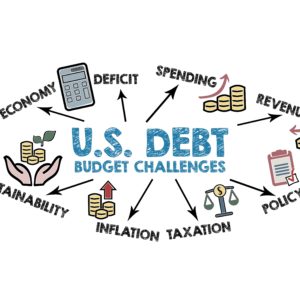
We Can’t Address the U.S. Deficit Without Corporate Tax Reform
In a new blog, FACT’s Thomas Georges and Evan Dymond argue that lawmakers must pursue revenue-raising corporate tax reforms if they are serious about tackling the nation’s fiscal crisis.

In a new blog, FACT’s Thomas Georges and Evan Dymond argue that lawmakers must pursue revenue-raising corporate tax reforms if they are serious about tackling the nation’s fiscal crisis.

With negotiations surrounding the expiration of large parts of the 2017 Tax Cuts and Jobs Act already underway, lawmakers must move quickly to close costly loopholes, prevent offshoring of jobs and profits, and provide adequate tax transparency for U.S. multinational corporations.
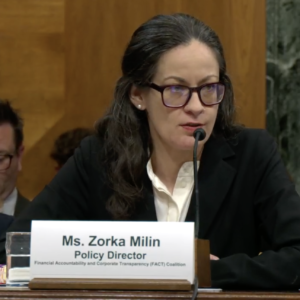
Read FACT policy director Zorka Milin’s full written testimony before the Senate Budget Committee, which details policy recommendations to curb offshore tax evasion by individuals and major multinationals.

Recent progress achieved through creating a global minimum corporate tax must be complemented by greater tax transparency and enforcement. As the saying goes, “sunlight is the best disinfectant.”

The Financial Accountability and Corporate Transparency Coalition (FACT Coalition) sent a letter to the Committee on Oversight and Government Reform with three recommendations to improve the implementation of the Foreign Account Tax Compliance Act (FATCA). The full letter can be read below or downloaded here.
Questions & Answers about the Foreign Account Tax Compliance Act (FATCA)
FATCA is the Foreign Account Tax Compliance Act, which was adopted in 2010 to help pay for the HIRE (Hiring Incentives to Restore Employment) Act. FATCA requires foreign financial institutions (FFIs) to determine if accounts they have opened are held, directly or indirectly, by Americans and, if so, disclose them to the Internal Revenue Service (IRS). Any FFI that refuses to provide this information to the United States is subject to a 30% withholding tax on the FFI’s U.S. source income.