
“Just the FACTs” is a round-up of news stories and information regarding efforts to combat corrupt financial practices, including offshore tax haven abuses, corporate secrecy, and money laundering through the financial system.
Send feedback or items for future newsletters to Thomas Georges at tgeorges@thefactcoalition.org
State of Play
Law Enforcement, Transparency Advocates Defend Corporate Transparency Act Amidst House Committee’s Vote to Advance Repeal Bill
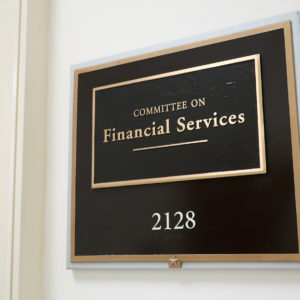
On Tuesday, April 21, the House Committee on Financial Services (HFSC) voted to advance a bill that, if signed into law, would effectively nullify the Corporate Transparency Act (CTA) by excluding all domestic entities and all domestic beneficial owners from reporting requirements.
In a statement, FACT deputy director Erica Hanichak condemned the vote, saying that “There could be no greater gift to the fentanyl traffickers, fraudsters, and U.S. adversaries that rely on the anonymity that shell companies provide than gutting the Corporate Transparency Act.” Hanichak’s statement was quoted in coverage of the vote by Thomson Reuters, Accounting Today, and OCCRP.
Numerous letters opposing the legislation (H.R. 425) were sent to HFSC members in the days immediately leading up to and following markup. Notably, the National District Attorneys Association (NDAA) urged lawmakers not to advance the legislation, saying that “Repealing the Corporate Transparency Act will have devastating consequences for prosecutors and law enforcement’s ability to fight criminal enterprises that exploit shell companies.” Similar objections were raised in official letters and statements by the International Coalition Against Illicit Economies (ICAIE), Puerto Rican transparency organization and FACT-member Sembrando Sentido, Common Cause, and retired government officials Richard Nephew and Debra LaPrevotte.
Following the vote, FACT and Transparency International U.S. sent a letter to HFSC leadership addressing several misconceptions voiced by lawmakers during the proceedings surrounding the CTA. Despite spurious claims to the contrary, small business compliance costs are estimated to be very modest, and the law is carefully crafted to work for – not against – honest small businesses.
In Congressional Shadow Hearing, FACT Policy Director Highlights Low U.S. Taxes Paid by Big Pharma and Big Oil

On Tuesday, April 21, FACT policy director Zorka Milin testified at a Congressional Progressive Caucus shadow hearing titled “Visions of an Affordable Life: Taxing Corporate Greed.” Milin’s testimony highlighted much-needed reforms to improve taxation of the foreign profits of U.S. multinational corporations, with a particular focus on Big Pharma and Big Oil.
Citing recent FACT analysis, Milin noted that new tax disclosures confirm that “the U.S. tax code fails to stop big corporations from moving their profits offshore, at enormous cost to our federal revenues and domestic jobs,” adding that “This is not America-first. It’s corporations-first, Americans-last.” Big Pharma has long been a poster child of corporate offshore tax avoidance: in FACT’s analysis of the financial disclosures of 40 large U.S. multinationals, just 10 pharmaceutical and biotech companies reported larger tax savings from tax haven jurisdictions (about $5.5 billion in 2025 alone) than the remaining 30 companies combined.
The U.S. also continues to provide preferential tax treatment to the oil and gas sector, even as these same companies expect a windfall of more than $60 billion this year due to the ongoing war with Iran. Recent FACT analysis shows that the three largest U.S. oil majors – Exxon, Chevron, and ConocoPhillips – each paid significantly more to foreign governments in 2025 than to the U.S., where their average effective tax rate on domestic income was around 6 percent. FACT’s analysis of the three supermajors was highlighted in the HeatMap climate newsletter and on the Law360 legal news website.
In her testimony, Milin called for eliminating perverse incentives for companies to outsource domestic profits and jobs, as well as repealing all tax subsidies for the oil and gas industry.
Latest from FACT
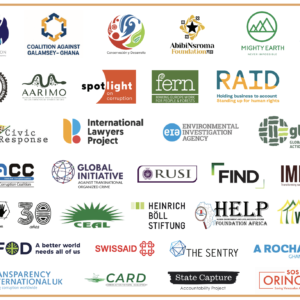
Read the new briefing paper prepared by FACT and 33 other non-governmental organizations ahead of this summer’s UK Illicit Finance Summit, with recommendations for both UK-level and global reforms necessary to tackle the growing threats associated with the illicit gold trade.
From the briefing paper: “The June 2026 Illicit Finance Summit provides an opportunity for the UK to demonstrate genuine global leadership in addressing the illicit gold trade and related finances by strengthening international frameworks and by bolstering domestic credibility…In doing so, the UK should ensure that these frameworks are better aligned with the need to address serious human rights abuses linked to gold supply chains.”

In their latest blog, FACT policy officer Thomas Georges and policy director Zorka Milin break down new disclosures from U.S. oil majors Exxon, Chevron, and ConocoPhillips that shed light on these companies’ low U.S. tax payments. Low tax rates across the oil and gas sector are informed by a number of new and historic tax breaks, including both industry-specific tax subsidies and general corporate tax provisions like bonus depreciation.
From the analysis: “These tax cuts and subsidies benefit corporations but do nothing to lower gas prices at the pump for American consumers, because oil and gas prices are set on global commodity markets. Without a clear policy rationale, and with oil companies set to enjoy massive windfall profits as a result of the ongoing Iran conflict, there is an urgent need to eliminate costly and ineffective tax preferences for oil and gas exploration and drilling.”
FACT in the News

Foreign Policy: South American Crime Groups Are Going for Gold
FACT program director for environmental crime and illicit finance Julia Yansura was quoted by Foreign Policy in lengthy coverage of the ongoing shift from cocaine to gold as the primary source of funding for South American organized crime groups.
From the coverage: “There is a lower risk of being arrested for smuggling illegal gold than for drug trafficking, largely because gold ‘is not an inherently illegal product,’ said Julia Yansura, one of the authors of the FACT Coalition report—as opposed to cocaine.”

Financial Times: Big Drugmakers Saved at Least $5bn on US Taxes Shifting Income Overseas
FACT’s analysis of newly-required income tax disclosures was cited by the FT’s Patrick Temple-West and Stephen Foley in coverage of Big Pharma’s offshore tax avoidance.
“FACT Coalition, a Washington-based tax transparency group, analysed disclosures from 40 of the biggest companies and calculated they collectively saved more than $11bn in 2025 by booking profits in lower-tax jurisdictions. The coalition said about half of those savings were attributable to just 10 pharmaceutical and biotech companies…The disclosures exclude territories below a certain threshold and therefore understate the total savings, FACT Coalition said.”

Reuters: US Judge Strikes Down Rule Targeting Money Laundering in Real Estate
FACT executive director Ian Gary was quoted by Reuters’ Luc Cohen on the latest legal developments surrounding the Treasury’s long-awaited new anti-money laundering rules for certain residential real estate transactions.
From the coverage: “The FACT Coalition, an advocacy group that supports the rule, said it expected the government to prevail on appeal. FACT Executive Director Ian Gary said in a statement, ‘The district court in Texas has just sided with cartels, money launderers, and U.S. adversaries.’”
From Our Members and Allies

Small Business for America’s Future: Taxed Out – Main Street on the Two-Tier Tax Code
In a new poll by Small Business for America’s Future, eight out of ten small business owners say that corporate tax loopholes give big companies an unfair edge and want to see them closed. In particular, they support closing the so-called “round-tripping” loophole, which pharma companies use to route profits from sales to U.S. customers through foreign tax havens. Closing just this single loophole would raise nearly seven billion dollars in new revenue annually, according to Penn-Wharton Budget Model.
Big corporations shift profits overseas on paper. Small businesses pay their full share.
— Small Business for America’s Future (@SmallBizFuture) April 15, 2026
One loophole. $7 billion a year in lost revenue.
We're breaking it down in Taxed Out. Watch ⬇️ https://t.co/y6sAa6yoig

Washington Times: Help Keep Dirty Money Out of America’s Housing Market
A recent op-ed by Frank Russo urged the Trump administration to continue its legal defense of the Treasury’s new anti-money laundering rule for domestic real estate markets, which was wrongly struck down by a Texas judge last month. The Trump administration has until mid-May to appeal that ruling. For decades, U.S. real estate has been used to launder the proceeds of drug trafficking, facilitate sanctions evasion by our national adversaries, and enable domestic and foreign corruption. As Russo argues in the piece, the real estate rule “provides actionable leads…that can mean the difference between stopping a criminal network and letting it flourish.”
In her new blog, Tax Justice Network Africa’s (TJNA) Everlyn Kavenge Muendo argues that ongoing negotiations toward a UN Tax Convention present an opportunity to establish a global, comprehensive mandatory public country-by-country reporting (CbCR) regime for large multinational corporations. While many governments currently exchange confidential CbCR for tax enforcement purposes, developing countries – and African countries in particular – largely remain locked out of these exchange networks due to stringent technical requirements surrounding data confidentiality, among other factors.
From the blog: “Public CbCR would drastically even out the playing field for many Global South countries and address the information asymmetries that make it difficult to effectively tax multinational corporations within the (African) continent.”
Job Openings
Institute on Taxation and Economic Policy (ITEP): Operations Manager
The Institute on Taxation and Economic Policy – a FACT member and leading non-partisan tax policy organization – seeks a full-time Operations Manager in Washington, DC. The Operations Manager will provide administrative and operational support to ensure smooth daily operations, organized financial management, and administrative efficiency. Applications are due by Wednesday, May 27.
Office of Sen. Sheldon Whitehouse: Legislative Correspondent, Tax and Trade
Veteran tax fairness and financial transparency champion Senator Seldon Whitehouse (D-RI) seeks a Legislative Correspondent for a portfolio including tax, trade, financial services, housing and other areas based on interests and office needs. Primary responsibilities include responding to constituent mail, meeting with constituent groups, and working with the legislative team to advance the Senator’s policy goals.
Recent and Upcoming Events
Inter-American Development Bank: Effective Policies for AML/CFT and Countering Illicit Finance

FACT’s Julia Yansura recently spoke at an event organized by the Inter-American Development Bank titled “Effective Policies for AML/CFT and Countering Illicit Finance,” which focused on the effectiveness and implementation of anti-money laundering efforts. The event was a collaboration between a number of intergovernmental organizations, including the Financial Action Task Force (FATF), the International Monetary Fund (IMF), the World Bank, the Financial Action Task Force of Latin America (GAFILAT), and the Caribbean Financial Action Task Force (CFATF). Yansura’s remarks focused on the illicit finance risks associated with dirty gold, including measures that countries can take to address this increasingly lucrative and prolific illicit economy.
Fair Tax Summit in Detroit, June 15-16
FACT will join other tax policy experts, advocates, organizers, and philanthropic partners at the upcoming Fair Tax Summit national strategy convening in Detroit. The Summit will provide participants an opportunity to bridge state and federal strategies, align around shared principles, and catalyze collective action.
About the FACT Coalition