
Recent elections in Serbia and the United States were a referendum on corruption, and a reminder that democracy’s future depends on accountability.
Last week’s midterm elections in the United States and Serbia’s recent democratic breakthrough offer a powerful reminder that corruption has consequences. In both countries, public frustration with abuses of power and a lack of accountability has become a driving force for political change. While political circumstances in the two countries are very different, the message is strikingly similar: people want governments that serve the public, not powerful insiders.
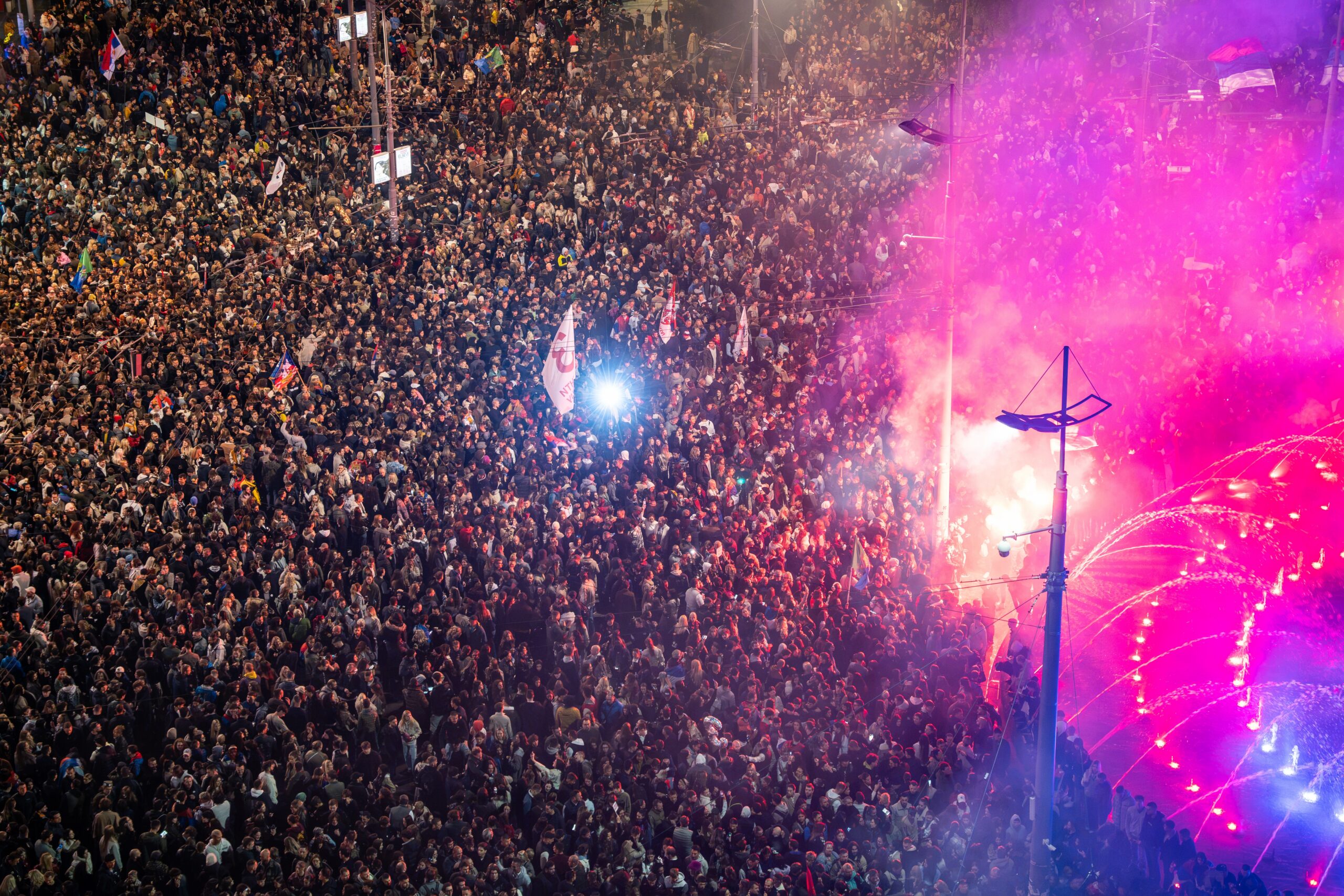
Serbia’s landslide democratic victory over longtime autocrat Aleksandar Vucic is cause for celebration for anyone who cares about democracy’s future. In his concession speech, Vucic blamed “the American deep state”, but the truth is, his own regime’s deep corruption was what brought it down.
As a Serbian-American who has dedicated my career to fighting corruption and promoting financial transparency, I take these victories and their significance personally. I left Serbia as a teenager and watched with dismay as the ruling regime hardened into an authoritarian kleptocracy that left ordinary Serbs impoverished, cynical, and hopeless. In 2000, a student-led protest culminated in the “bulldozer revolution” that toppled strongman Slobodan Milosevic, the “butcher of the Balkans,” and even inspired the Arab Spring years later.
Swept up in the euphoria, I returned to Belgrade as a young journalist and watched the new government’s reform and accountability efforts from the front row. I chronicled milestones that once seemed unthinkable, including the new Serbian government’s arrest and his extradition of Milosevic to The Hague to face charges of crimes against humanity, war crimes, and genocide.
But the reformist moment was short-lived: it was tragically derailed when pro-Western prime minister Zoran Djindjic was assassinated in 2003. In the years that followed, nationalist and far-right parties rose, and Vucic built an entrenched, corrupt regime. By 2025, Transparency International ranked Serbia as Europe’s most corrupt country, aside from Russia, Belarus, and Turkey.
Unchecked corruption proved the regime’s Achilles heel. Two years ago, the collapse of the roof of the main train station in Novi Sad, Serbia’s second-largest city, killed 16 people. The tragedy ignited public grief and rage, sparking a student protest. When the government ignored students’ calls for transparency and accountability, the protests flooded from the universities into the streets.
Corruption, commonly understood as the abuse of public power for private gain, can be fatal to democracy because it destroys the trust in public institutions on which democratic governance depends. And it is not a disease of poor and unstable countries alone. Even rich, established democracies like my adopted home, the United States, are not immune. The United States now ranks worse than ever on international corruption rankings, and Americans are noticing. A recent Fox News poll found that voters now name government corruption as their top concern, ahead of inflation and gasoline prices. Nearly all voters, about 9 in 10, told CBS that government corruption was a major factor in their vote.
The costs of corruption in the United States are real. Corporate influence and dark money shape who writes the rules and who bears the costs. Criminal and corrupt actors hide behind anonymous shell companies to buy up housing, launder money, and evade sanctions, while ordinary families struggle with rising rents and prices. Big corporations that shift profits offshore deprive the country of essential tax revenues that could pay for healthcare, childcare, and other support for families, leaving workers and small businesses to shoulder more of the load. Powerful donors and lobbyists win favors that weaken safeguards, entrench monopolies, and drive up the prices of everything from medicines to groceries. Americans should not have to wait for the deaths of innocent civilians to serve as a wake-up call to recognize the devastating consequences of corruption.
U.S. democracy defenders have been understandably focused on the urgent task of securing free and fair elections. But elections, essential as they are, are not enough. Anti-corruption safeguards, financial transparency, and accountability are as vital to democracy as the ballot box itself. They are democracy’s penicillin. Corruption feeds on secrecy, and nothing hides corrupt practices better than financial systems that let looted money vanish into anonymous shell companies and offshore tax havens. When citizens, journalists, and prosecutors can see who owns what and who pays what in taxes, they can follow the money.
For the United States, the lesson is especially timely. The next Congress has an opportunity – and a responsibility – to strengthen financial transparency safeguards, close loopholes that enable illicit finance and tax avoidance, and ensure that powerful interests across the political spectrum are held accountable.
Serbia shows what happens when corruption with impunity becomes pervasive, and what becomes possible when people rise against it. For years, public money flowed to connected insiders with little scrutiny, and the regime intimidated courageous investigative reporters who looked into it. Then a roof collapsed, and the human toll of that corruption became impossible to ignore. Serbians did not take to the streets over an abstraction like democratic backsliding. They protested because corruption had cost lives, and because no one in power would answer for it. Their demand was simple: tell us what happened, explain what went wrong, and hold those responsible to account. That insistence became a rallying cry for a movement that would ultimately bring down a regime that had ruled for 14 years.
The lesson from Serbia and last week’s U.S. elections is that voters do not need a political science degree to recognize corruption, and they can vote out those who encourage or tolerate it. Democracy defenders everywhere should take heart. However bleak things seem, a better day can come. In Serbia, it came because people refused to accept corruption as inevitable. It is not inevitable here in the United States either. But winning elections is only the beginning. The real work is building a democracy in which transparency, accountability, and the rule of law endure long after the votes are counted.