Personal Reflections from FACT’s Outgoing Executive Director Ian Gary
After almost six years as executive director of the FACT Coalition, and several decades working in international social justice advocacy, my full-time work has come to a close.
Reviewing my career, one common thread stands out – it’s always been about who gets what and why. Now, with the hyper-concentration of wealth and power, this question is fundamental to the struggles to defend democracy, tackle the climate crisis, and create more fair and just societies. The work of the FACT Coalition, now under the co-leadership of Zorka Milin and Erica Hanichak, could not be more relevant to these struggles.
Throughout my career – which has taken me from oil-boom Ghana to the Peruvian Amazon, from Chevron board meetings to encounters with the World Bank president, and from scrappy non-profits to well-endowed foundations – I have been motivated by a desire to bring more transparency and everyday citizen influence to bear on decisions about “who gets what and why”.
Recently, a colleague and friend asked me what I was most proud of accomplishing. It’s a hard question to answer, but a few experiences stand out. And, it’s important to note, everything important has been achieved by working with others (with the exception of my decision to implement “Summer Fridays” at FACT).
- Revealing payments from oil and mining companies to governments (Dodd-Frank Section 1504): I was proud to be a leading policy advocate in efforts which led to a transparency revolution in the oil and mining sectors. Working with colleagues at Oxfam America, Global Witness, Earth Rights International, the ONE Campaign, and so many others in the Publish What You Pay US coalition, we successfully pushed Congress to enact the bipartisan Cardin-Lugar provision in the Dodd-Frank Wall Street Reform Act, Section 1504. The law requires disclosure of payments from oil and mining companies to host governments around the world. Previously shut out of knowing “who gets what”, now affected communities around the world can see the data. We successfully litigated to force the Securities and Exchange Commission to issue final rules to implement the law. More than 14 years after the law was passed, oil and mining companies started disclosing payment data in 2024, revealing disproportionately low US federal tax payments. The 20-year campaign went from “over my dead body” to an ordinary and necessary business disclosure practice. (For those donors reading, real change takes time – often more than a decade – and activist infrastructure needs to be supported over the long term. It will always be a David vs. Goliath story and there are no “quick wins” that will have lasting impact.)
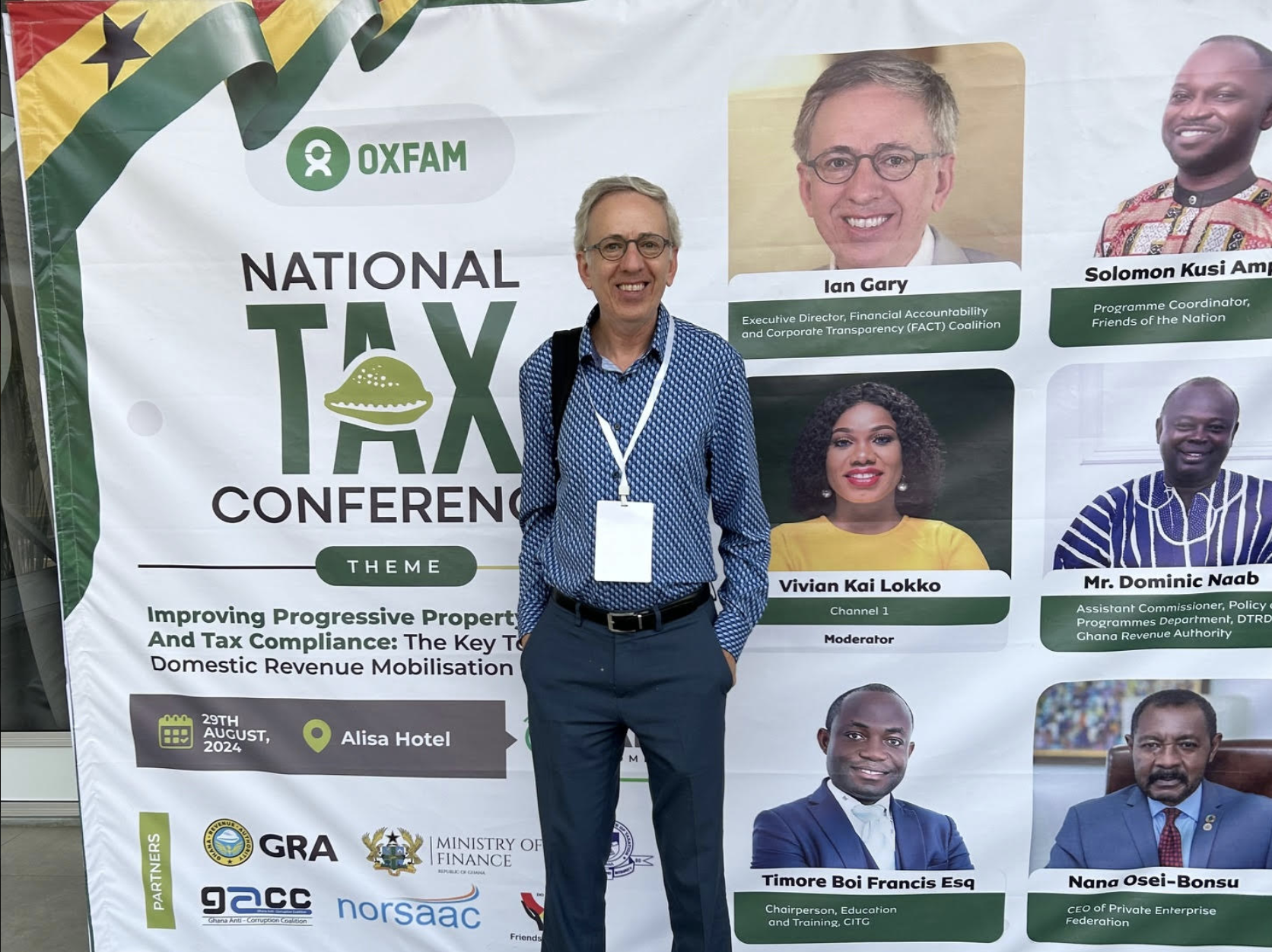
- Working in solidarity with Ghanaian advocates to create a system for managing new oil wealth: After a major oil discovery in 2007, I worked with civil society groups in Ghana who campaigned for a transparent and accountable system for managing the coming oil revenue windfall. A local-to-global campaign involving advocacy with oil companies, the World Bank and IMF, and the Ghanaian government led to the Petroleum Revenue Management Act, disclosure of oil payment and production data, the revelation of oil contract details, and the creation of a Public Interest and Accountability Committee (PIAC). The PIAC is a citizen-led body overseeing the management and use of billions of dollars of oil revenues for the benefit of Ghana’s citizens. (Ask me how this work led to meeting Brad Pitt.)
- Passage and implementation of the Corporate Transparency Act: I came late to the party, starting at FACT a few months before the passage and enactment of the Corporate Transparency Act, the most important U.S. anti-money laundering law in decades. Huge kudos to Gary Kalman, my predecessor, and all those who fought alongside the FACT Coalition for a decade to pass this law requiring the disclosure of the true owners of anonymous shell companies used to commit a wide range of crimes. I was proud to lead the coalition over the next few years to get the law fully implemented: a master class in tenacity and deep civil society expertise. Data was being collected up until early 2025 when the law was gutted by the Trump administration, reopening the floodgates to dirty money in the U.S. The law remains on the books, and the FACT Coalition will continue to fight for its full implementation. (I am forever grateful for all the contributions from the late Elise Bean in this fight.)
- Launching a new environmental crimes and illicit finance program at FACT: Starting from scratch, I led the development of a new program at the intersection of environmental crimes and illicit finance, focusing on how the proceeds of illegal mining and logging are often laundered through real estate and anonymous shell companies in the U.S. FACT convened experts in 2022 and raised half a million dollars in 2023 to formally launch the program. Our program director, Julia Yansura, has taken this program to new heights and curated a powerful community of FACT members and allies to tackle illicit finance and environmental crimes.
- A new era of corporate tax transparency: Multinational corporate tax avoidance has long been a well-known practice, but detailed information on individual corporate practice has historically been hard to come by. I was glad to play a part in the campaign to force companies to publicly reveal “country-by-country” reports on their tax practices. Now, such disclosures, which will aid tax authorities in the Global South and North, have moved from the realm of the impossible to the inevitable. FACT, along with investors, unions, and coalition members like Oxfam America have campaigned for greater disclosures and this year has seen the implementation of new Financial Accounting Standards Board requirements on tax transparency. Corporate titans such as Microsoft, Exxon, and others are now revealing their practices, adding pressure for global corporate tax reform. I was honored to be a part of the tax justice movement and to be listed on the 2025 Global Tax 50 by the International Tax Review.
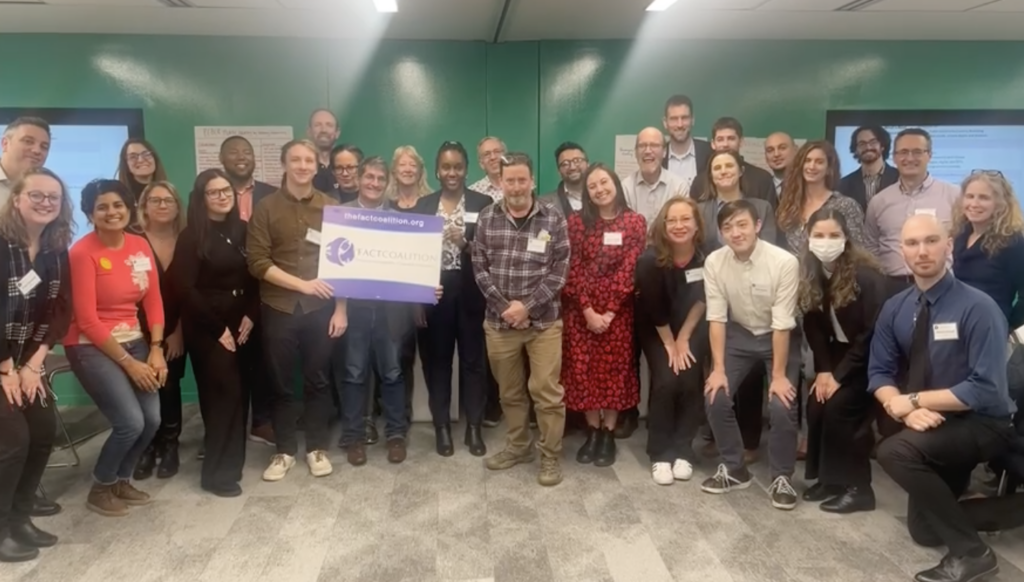
Beyond these “wins”, there are the more intangible achievements. I’ve loved supporting colleagues to learn and grow and to see people I’ve managed thrive in new roles (looking at you, Isabel). I’ve been delighted to see the FACT Coalition broaden the range of perspectives and expertise shaping its work. New Steering Committee members such as Issel Masses (como tú no hay dos) of Sembrando Sentido in Puerto Rico and Jyotswaroop Bawa of Rise Economy in California bring deep experience, fresh insights, and strong connections to communities that are essential to advancing the coalition’s mission. We’ve also made progress in connecting FACT’s issues, such as money laundering in real estate, with the concerns of working Americans, including by collaborating with housing rights and racial justice groups such as Action Center on Race and the Economy.
I step away from FACT confident that the new leadership team will meet this perilous moment for our nation and for our democracy. FACT’s work sits at the intersection of democracy, financial accountability, and institutional integrity. Fair tax systems, strong anti-money laundering rules, and corporate transparency are not just technical policy issues: they are safeguards against corruption, authoritarianism, and oligarchic influence. When tax enforcement is weakened, when financial secrecy expands, or when anti-corruption laws are hollowed out, democracy becomes less able to deliver for people and hold powerful actors accountable.
Democracy that delivers must be funded. The federal government needs revenue to invest in people, communities, and public goods. The answer to “who gets what and why?” should not be a tax system that allows billionaires and large corporations to avoid paying their fair share, undermining both trust in government and the government’s ability to act. The answer, instead, should be a fair tax system that helps redistribute not only wealth, but also political power so that ordinary people get to answer the question “who gets what and why?”