
“Just the FACTs” is a round-up of news stories and information regarding efforts to combat corrupt financial practices, including offshore tax haven abuses, corporate secrecy, and money laundering through the financial system.
Send feedback or items for future newsletters to Thomas Georges at tgeorges@thefactcoalition.org
State of Play
FACT Names Erica Hanichak and Zorka Milin Coalition Co-Directors

FACT is excited to announce the promotion of Erica Hanichak and Zorka Milin – formerly deputy director and policy director, respectively – as the coalition’s new co-directors. The leadership change follows former executive director Ian Gary’s departure on July 1, and comes as FACT continues its work to advance fair tax policy and ensure the United States remains a leader in the global fight against corruption and financial secrecy.
In a statement issued ahead of the leadership transition, outgoing executive director Ian Gary said that “Erica and Zorka are exactly the right leaders to guide FACT into this next phase…Their combined expertise, judgment, and commitment to FACT’s mission will be a tremendous asset to the coalition and the broader movement for financial accountability.”
Microsoft, Other Major U.S. Corporations Issue First International Tax Reports under EU Transparency Regime

In a major milestone for corporate tax transparency, American multinational companies including Microsoft, Bank of America, Procter and Gamble, Sysco, News Corp, and Digital Realty Trust published their first international tax reports pursuant to new European Union (EU) requirements. The new country-by-country reports include a detailed breakdown of pre-tax profits, number of employees, cash taxes paid, and other information for each of the 30 EU and European Economic Area (EEA) member states, as well as for jurisdictions on the EU’s so-called blacklist and graylist.
Microsoft’s disclosure, in particular, revealed the extent to which the company still heavily concentrates income in Ireland, a well-known tax haven. Microsoft reported more than $47 billion in Irish profits for its latest financial year – or around 38 percent of its global earnings – despite employing less than 3 percent of its workforce in the country, for an average profit per employee of more than $7 million, roughly 20 times more than in the rest of the world.
In a statement, FACT co-director Zorka Milin noted that “Microsoft’s new tax disclosures raise serious questions about the misalignment of economic substance and where profits are located, and how much revenue the U.S. and other market countries are losing as a result. These are high-stakes questions, particularly for a company that is currently contesting the biggest tax case in U.S. history, and is also positioning itself to be one of the top beneficiaries of the artificial intelligence boom. If our tax rules already aren’t fit for taxing digital giants, then these rules urgently need to be updated for an AI-driven economy.”
Microsoft’s report generated substantial press interest, including in the Wall Street Journal and two stories in Tax Notes, which featured comments from FACT staff.
Other companies reported booking substantial profits in jurisdictions where they have either minimal or no real economic presence. Procter and Gamble’s single employee in Luxembourg earned more than $114 million with no taxes either paid or accrued for the year, as highlighted by FACT member ITEP. Wholesale food distributor Sysco reported $21.7 million in profit in the Netherlands, also with just a single employee. Even more egregiously, data center investor Digital Realty Trust reported a profit of nearly $1.4 million in Luxembourg without any employees in the country at all.
Overall, compliance with the new EU law has been uneven, with American companies in particular accounting for the majority of noncompliance and inadequate compliance, according to separate analyses by the Fair Tax Foundation and the International Tax Observatory. The new European disclosures come on the heels of expanded tax reporting requirements from the Financial Accounting Standards Board (FASB) that entered into effect in late 2025, which include new information on foreign jurisdictions that substantially lower a given company’s taxes. FASB’s new tax accounting standard, while not constituting public country-by-country reporting (CbCR) and not being perfectly comparable with information presented in the EU disclosures, nevertheless serves to help stakeholders construct a more complete picture of a given company’s global tax structure.
Latest from FACT
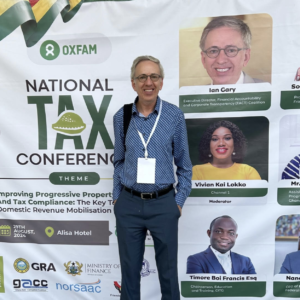
It’s Always Been About Who Gets What and Why
Read the farewell blog from former FACT executive director Ian Gary, sharing highlights from his decades-long career in international social justice advocacy, and looking toward a brighter future where ordinary people, and not just the ultra-wealthy and large corporations, get to answer the question “who gets what and why?”
From the blog: “I step away from FACT confident that the new leadership team will meet this perilous moment for our nation and for our democracy… Fair tax systems, strong anti-money laundering rules, and corporate transparency are not just technical policy issues: they are safeguards against corruption, authoritarianism, and oligarchic influence. When tax enforcement is weakened, when financial secrecy expands, or when anti-corruption laws are hollowed out, democracy becomes less able to deliver for people and hold powerful actors accountable.”
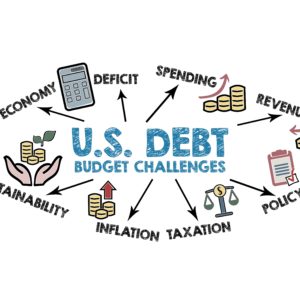
We Can’t Address the U.S. Deficit Without Corporate Tax Reform
In a new blog, FACT’s Thomas Georges and Evan Dymond argue that lawmakers must pursue revenue-raising corporate tax reforms if they are serious about tackling the nation’s fiscal crisis.
From the blog: “There is no one magic bullet to address our nation’s runaway debt… The problem will prove impossible to address, however, so long as the nation’s largest and most successful businesses continue to avoid paying meaningful levels of tax. Plenty of policymakers pay lip service to “fiscal responsibility” when it is politically convenient – if they want to prove that they are serious about tackling our fiscal crisis, then corporate tax reform should be at the top of the agenda.”
FACT in the News
Wall Street Journal: Microsoft’s Irish Hub Is Profit Powerhouse
FACT co-director Zorka Milin was quoted in the Wall Street Journal’s coverage of new EU country-by-country tax disclosures by Microsoft and other companies. In response to arguments from businesses that the new disclosures would be misunderstood or otherwise misinterpreted by the public, Milin noted that “…Companies are always free to provide their own context and their own narrative. Unfortunately very few of them do.”
Sunday Times: Deep in Ecuador’s Forests, the Cocaine Gangs Have a New Trade – Gold
FACT program director for environmental crime and illicit finance Julia Yansura was quoted in the Sunday Times’ coverage of illegal gold mining by criminal groups in Ecuador. The Times’ coverage was also accompanied by a video report, linked above.
Explaining why gold has become the preferred money-making venture of major drug gangs, Yansura noted that “Gold is a product that is apparently legal. It’s quite difficult for authorities to really prove that it is illegally sourced…It’s become a low-risk, high-reward illicit economy for these groups.”
From Our Members and Allies
The Hamilton Project: The Future of U.S. International Corporate Tax Reform
A major new international tax policy proposal from Professor Kimberly Clausing (UCLA Law) dramatically redefines how the U.S. should tax the foreign income of its largest multinational companies, largely in line with FACT’s longstanding recommendations. The proposal would raise $4.0 trillion in new revenue over ten years through a combination of raising the tax rate for the largest corporations to 29.7 percent, raising the tax rate on foreign earnings to approximately 23 to 25 percent, applying the U.S.’ global minimum tax on a country-by-country basis, repealing the wasteful FDDEI export subsidy, and other reforms.

Tax Justice Network Ranks U.S. Top Real Estate Secrecy Jurisdiction
The Tax Justice Network’s new Real Estate Secrecy Index – a component of the long-running, widely-used Financial Secrecy Index – ranks the U.S. as the least transparent jurisdiction with regard to the availability of ownership information for real estate. Though a number of countries earned bottom marks on the new index, the sheer size of the U.S. real estate sector propelled it to the number one spot.
This outcome should not be surprising. In March, a federal district court struck down the U.S.’ first-ever federal anti-money laundering requirements for the residential real estate sector, and the decision is currently under appeal. Meanwhile, the U.S.’ corporate ownership registry established under the Corporate Transparency Act has been gutted by the Trump Administration, and faces both threats in Congress and legal challenges (the Supreme Court is currently considering whether to hear the case). The Treasury Department’s 2024 and 2026 National Money Laundering Risk Assessments affirm the ample illicit finance risks present in the U.S. residential real estate sector, and commercial real estate has long been acknowledged as a preferred money laundering vehicle for foreign adversaries and transnational criminals.

Transparency International U.S.: Illicit Finance Gaps in the CLARITY Act
Read TI-US’ new fact sheet identifying more than a dozen illicit finance vulnerabilities in the CLARITY Act, which would establish a federal regulatory framework for cryptocurrencies and digital assets.
From the fact sheet: “Market structure legislation should not create new pathways for digital asset businesses to serve U.S. customers, move dollar-denominated value, or profit from transaction activity while avoiding basic anti-money laundering (AML), sanctions, fraud-prevention, recordkeeping, and law enforcement response obligations.”
Job Openings

Center for American Progress (CAP): Policy Analyst, Economic Policy
CAP seeks a Policy Analyst with strong quantitative and writing skills, as well as experience working with economic data, to support its Economic Policy team’s efforts to promote an economy that works for all. This position will remain posted until filled, but interested candidates are encouraged to apply as soon as possible. See the link above for more information on requirements and qualifications, as well as how to apply.
AFSCME seeks a legislative affairs specialist to develop and maintain relationships on the Hill and with the administration, build and maintain relationships with other labor unions and coalition allies, and inform and engage AFSCME’s affiliates in federal legislative campaigns.
Interested candidates can apply by emailing a cover letter and resume to recruiting@afscme.org. See the link above for more information about the position and how to apply.
Recent and Upcoming Events

Andrea Gacki, director of the Financial Crimes Enforcement Network (FinCEN) will testify on the bureau’s recent activities before the HFSC’s Subcommittee on National Security, Illicit Finance, and International Financial Institutions on July 21.
Fair Tax Foundation: PCbCR in Practice – A Landmark Year for Reporting Worldwide
On June 22, FACT co-director Zorka Milin joined experts from the Fair Tax Foundation and the private sector to discuss recent developments in international tax transparency, including the rollout of new accounting rules in the U.S. and the advent of public CbCR in the EU and Australia. The webinar was covered in Tax Notes, including remarks by Milin, who highlighted the overlap between the U.S. companies that have been most resistant to enhanced tax transparency measures and those that have historically been most associated with tax havens.
From the coverage: “The (Fair Tax) Foundation found that the pharmaceutical sector was the worst performer (in the EU’s public CbCR regime, so far). Milin said she found that interesting because her own research showed that the sector was ‘quite fond of using tax havens.’”

Event: Gold’s Dark Web – The Hidden Price of a Booming Market
On June 25, during London Climate Action Week 2026, FACT program director for environmental crime and illicit finance Julia Yansura joined community leaders and experts for a panel examining potential policy solutions to the ongoing scourge of illicit gold. A full write-up of the event, complete with slides and speaker bios, can be found at the link above, courtesy of event co-host Fern.
From the write-up: “Julia Yansura, Program Director for Environmental Crime and Illicit Finance at the FACT Coalition, argued that relatively little attention has been paid to tackling the billions of dollars of “dirty money” generated by illegal mining…A more effective approach, she argued, would target the financial incentives that make illegal mining so profitable — not just the gold price itself, but the ease with which illicit gold is commingled with legitimate gold and profits quietly enter the international financial system. Tackling the harms of illegal mining, she said, should not be the sole responsibility of mining countries: financial centres such as London, New York and Miami have a responsibility to act on the money flowing through their own systems.”
On June 15-16, FACT co-directors Zorka Milin and Erica Hanichak joined hundreds of tax organizers and state legislators who traveled to Detroit from around the country to discuss topics ranging from the intersection of tax and climate, how taxes can rebuild trust in our democracy, and philanthropy’s role in tax reform. The convening was co-organized by Better Taxes for a Better America, the State Revenue Alliance, and Families Over Billionaires.
About the FACT Coalition