
“Just the FACTs” is a round-up of news stories and information regarding efforts to combat corrupt financial practices, including offshore tax haven abuses, corporate secrecy, and money laundering through the financial system.
Send feedback or items for future newsletters to Thomas Georges at tgeorges@thefactcoalition.org
State of Play
Bill to Improve Corporate Tax Transparency Reintroduced in House and Senate

On July 16, Senator Chris Van Hollen (D-MD) and Representative Brittany Pettersen (CO-7) reintroduced the Disclosure of Tax Havens and Offshoring Act, legislation that would require American multinational corporations to publish expanded financial information on their offshore operations, known as public country-by-country reporting (CbCR).
In a statement, FACT co-director Zorka Milin applauded Sen. Van Hollen and Rep. Pettersen’s leadership in reintroducing the legislation, and noted that “Increased transparency is essential to creating a fairer corporate tax system that raises needed revenue and protects American manufacturing and jobs from offshoring.”
This year, Australia and the European Union are implementing laws requiring public country-by-country reporting for certain large multinationals. The Disclosure of Tax Havens and Offshoring Act builds on those reforms and provides a more comprehensive and effective set of reporting requirements.
New public CbCR disclosures in the European Union are already providing a glimpse into the scale of continued offshore tax avoidance by America’s largest companies, enabled by a corporate tax code that still encourages multinationals to shift profits and jobs to tax havens. More comprehensive U.S. disclosures would help to inform international tax debates by providing lawmakers, journalists, investors and other stakeholders with high-level information about specific companies’ real operations and taxes (or lack thereof) in haven jurisdictions. While a senior U.S. Treasury official recently claimed that public CbCR is “very dangerous”, last month’s $74 million settlement by pharma giant Amgen points to the true dangers and costs of tax secrecy for companies and investors alike.
Greater tax transparency should be coupled with adequate funding for the Internal Revenue Service (IRS), enabling it to conduct more effective audits and enforce the law against large multinational corporations. On July 20, Representatives Suzan DelBene (WA-01), Terri Sewell (AL-07), Judy Chu (CA-28), and Ro Khanna (CA-17) introduced legislation to restore $83 billion in IRS funding, of which more than half would go to enforcement efforts with a focus on high-net-worth individuals, corporations, and other large businesses. Companion legislation was introduced in the Senate in April.
Treasury’s Rollback of Key Anti-Money Laundering Measures Front and Center at House Hearing
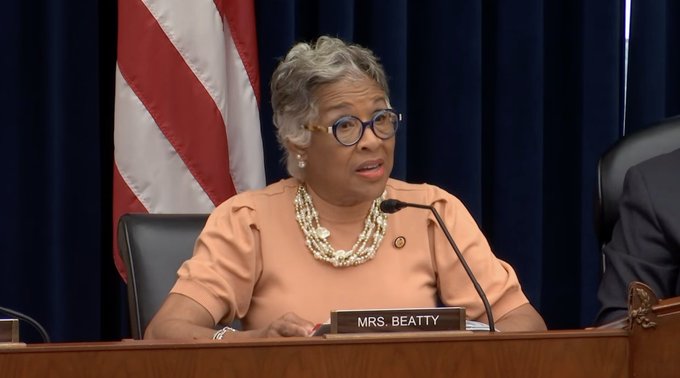
On July 21, the House Financial Services Committee’s National Security Subcommittee held its annual oversight hearing for Treasury’s Financial Crimes Enforcement Network (FinCEN). Outgoing FinCEN director Andrea Gacki’s testimony came at a tumultuous time for the bureau, which is in the final stages of rolling out disastrous regulations gutting the bipartisan Corporate Transparency Act (CTA), which requires anonymous shell and front companies frequently used by criminal networks, fraudsters, and foreign adversaries to report their true ownership.
That upcoming final rule was put under a microscope by multiple lawmakers during the hearing. Subcommittee ranking member Joyce Beatty (D-OH-3) derided the rollback of the CTA and other recent steps by the Trump administration “…to weaken the very tools that help investigators follow the money, protect consumers, and hold bad actors accountable.”
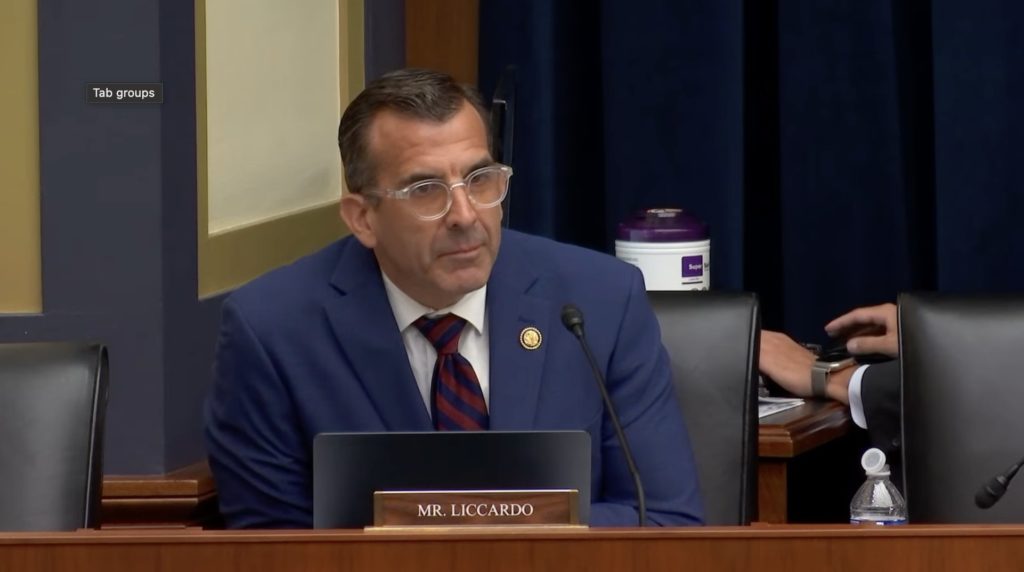
Representative Sam Liccardo (D-CA-16) also questioned Director Gacki on FinCEN’s final rule rolling back the CTA, under which U.S. companies and individuals no longer have to report ownership information to the Treasury. In a striking exchange, Liccardo noted that “there’s no question that criminal organizations use U.S. companies as shell companies to hide their illicit proceeds and move their funds,” which Gacki confirmed. Liccardo responded by noting that the broad exemption for U.S. companies – which make up more than 99 percent of all entities originally covered under the CTA – is akin to deciding to “launch a global naval strategy and exempt the Pacific Ocean.”
Decades of evidence compiled by Congress and Treasury’s own risk assessments confirm that anonymous U.S. companies represent a significant illicit finance and national security threat. FACT, alongside prominent law enforcement organizations, continues to urge Treasury to reconsider or withdraw its disastrous rulemaking gutting the CTA, and more broadly to redouble its commitment to adequately assessing and preventing illicit finance risks.
New OECD Paper Shows Global Minimum Tax Working as Intended
The groundbreaking global minimum tax (GMT) has already increased effective tax rates by 1.0-2.0 percent and increased global corporate tax collections by 2.4-3.4% in its first year, without decreasing investment or employment, according to a new report by the Organization for Economic Cooperation and Development (OECD).
Notwithstanding the controversial “side-by-side” arrangement that exempts U.S. companies from key aspects of the GMT, these findings suggest that the GMT is meeting its goals of increasing effective tax rates and curbing incentives for corporate profit shifting by raising the floor for global corporate tax competition. FACT co-director Zorka Milin echoed that sentiment in Politico’s Weekly Tax update on the OECD’s findings, saying that “This project isn’t just about raising revenues: the main objective is to deter profit shifting, and it seems that’s working.”
Latest from FACT
Environmental Crimes Newsletter: Summer 2026
Read the latest edition of FACT’s Environmental Crimes Newsletter, a biannual roundup of developments in the fight against environmental crime and the illicit finance that enables it.
The Summer 2026 edition is filled with updates from FACT and our network of members and allies, including great work from WWF-UK, the Financial Transparency Coalition, Earth League International, IrpiMedia and Armando.info, and more.

Global Tax Reform Is the Key to a Fair AI Economy
Read FACT co-director Zorka Milin’s new op-ed in Project Syndicate arguing that multilateral cooperation will be central to fairly taxing the corporations that are poised to benefit the most from the AI revolution.
From the piece: “If AI-driven profits are subject to the same asymmetric global tax architecture that has allowed digital activities to be undertaxed, there is a good chance that Big Tech’s outsize power will only grow… Corporate tax policies are the battleground where public trust in this new technology, and our governing institutions, will be won or lost.”

Ireland, AI and Microsoft’s Vanishing Tax Bill
In a new blog, FACT’s Thomas Georges and Zorka Milin delve into Microsoft’s new financial disclosures as a case study in the challenges of taxing AI, as both tax-haven offshoring and massive AI investment reduce corporate taxes owed. They conclude that – though many new proposals focus on AI-specific taxes and other reforms – improving our current corporate tax system is a prerequisite for any resilient approach to taxing AI.
FACT in the News

Miami Herald: Letter to the Editor – Stop Dirty Money
The Miami Herald published a letter to the editor by FACT co-director Erica Hanichak, highlighting that recent reporting on the FBI’s investigation linking the Argentine Football Association with the movement of hundreds of millions of dollars through South Florida companies should concern more than just soccer fans.
From the LTE: “South Florida has long been a gateway for international business and investment. That’s a strength for the U.S. economy, but also makes the region a target for dirty money moving through legitimate businesses and financial institutions…Whatever the outcome of this investigation, it should serve as a reminder that transparency matters.

FACT’s Julia Yansura was quoted in Mongabay’s coverage of the recent penetration of illegal mining operations and associated deforestation into protected areas of the Colombian Amazon. Increasingly, the violence that comes with illegal mining is reaching isolated indigenous communities.
“Illegal mining is statistically associated with higher levels of violence,” said Yansura. “Not only is mining reaching the most remote areas, but organized crime is also reaching those areas now. It’s not illegal mining itself, but who is behind it.”

Bloomberg Tax: Weaker Minimum Book Tax Rules Save Meta, Qualcomm Billions
FACT co-director Zorka Milin was quoted in Bloomberg Tax’s coverage of the Treasury Department’s ongoing rollback of the Corporate Alternative Minimum Tax (CAMT), the 15 percent minimum tax on the largest companies.
Treasury’s recent regulations severely limiting the applicability and impact of the tax for many businesses “have the cumulative effect of basically repealing CAMT,” said Milin. “I think that’s not an overstatement,” and “the chances are probably pretty good there will be more.”
FACT’s Erica Hanichak spoke alongside Modern Fortis’s Frank Russo on the Corruption, Crime and Compliance podcast, where they provided updates on the House Financial Services Committee’s recent efforts to repeal the Corporate Transparency Act “despite broad, bipartisan, cross-sector opposition from law enforcement groups, financial institutions, and anti-trafficking organizations…”
From Our Members and Allies
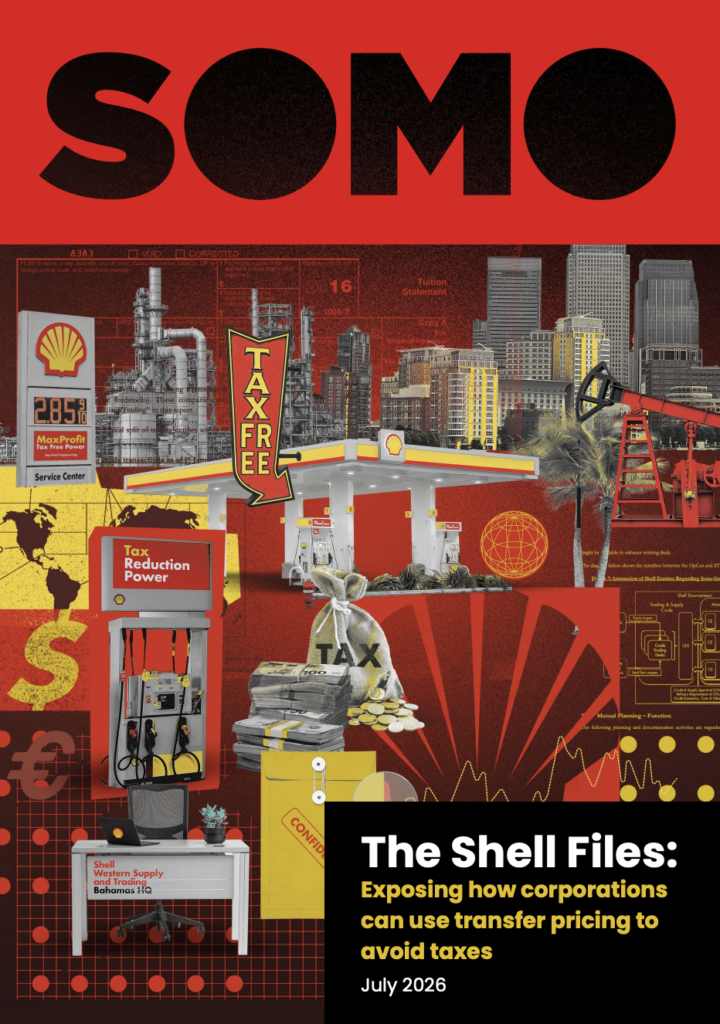
SOMO: The Shell Files – Exposing How Corporations Can Use Transfer Pricing to Avoid Taxes
Read the latest report by corporate power watchdog SOMO analyzing oil and gas supermajor Shell’s leaked transfer pricing documents, which reveal how the current international tax system largely allows multinational corporations to pick and choose where – and how substantially – they are taxed.
From the report summary: “Although this report focuses on Shell’s practices, its conclusions extend well beyond a single company. The Shell Files offer a rare glimpse into a system that governs virtually every multinational corporation, which includes transfer pricing reports that are not usually made public. They reveal structural weaknesses in the OECD’s approach that apply across the global corporate tax system.”
In a new report, Tax Justice Network’s Alison Schultz and Alex Cobham analyze the expected impacts of a shift from the transfer pricing architecture that has defined international corporate taxation for more than a century to a unitary taxation system. The authors find that nearly every country would benefit from unitary taxation across a number of different scenarios – with the exception of a handful of low-substance tax haven jurisdictions and so-called “headquarters bias” nations.
From the report: “High-income countries would be the greatest winners in absolute terms, because they are the biggest losers from the failures of the OECD rules. Lower-income countries, however, stand to benefit most dramatically, since the additional revenues are often greater than their current total tax revenues from multinationals.”
Job Openings

Roosevelt Institute and Data & Society: Residency on AI
Apply now for the Roosevelt Institute and Data & Society’s new Residents Program on AI, a policy residency for emerging scholars and practitioners examining how public policy can help shape investment in generative AI by reducing market concentration, ensuring that labor leads the transition, and preventing AI investment from crowding out other economically important industries.
This paid residency will run from September 2026 until February 2027. Roosevelt and Data & Society will select a total of three residents, who will receive $3,000 and produce short policy research and writing. Interested candidates should apply by Wednesday, August 12, 2026.
Recent and Upcoming Events

(September 22) FACT Event: From Hidden Wealth to Public Trust – Reclaiming Our Democracy
From the very beginnings of American democracy, taxes have been a battleground for the struggles that have defined America and who counts as “We the People.” Today, a new kind of struggle is underway over whether the wealthiest Americans and the biggest corporations can continue to hide their money and exert political power out of reach of public accountability.
Join the FACT Coalition for a wide-ranging conversation with Vanessa Williamson (Brookings Institution, Urban-Brookings Tax Policy Center) and Casey Michel (Human Rights Foundation) drawing on their two recent books: Williamson’s The Price of Democracy – The Revolutionary Power of Taxation in American History and Michel’s newly-released United States of Oligarchy – How America’s Wealthiest Ally with Dictators, Weaken the U.S., and Destroy Democracy.
Together, they’ll explore how we got here and the reforms, coalitions, and historical precedents that show that a more transparent and democratic system is both necessary and achievable. Other speakers will include Sarah Pray, executive director of Better Taxes for a Better America, and FACT co-director Zorka Milin.
RSVP to attend in person in Washington D.C. or online on Zoom. Hors d’oeuvres and refreshments will be provided from 4:30-6:00pm for in-person attendees.
About the FACT Coalition