
“Just the FACTs” is a round-up of news stories and information regarding efforts to combat corrupt financial practices, including offshore tax haven abuses, corporate secrecy, and money laundering through the financial system.
Send feedback or items for future newsletters to Thomas Georges at tgeorges@thefactcoalition.org
State of Play
Treasury’s Final Rule Gutting Corporate Transparency Act Sets U.S. Anti-Money Laundering Efforts Back Decades
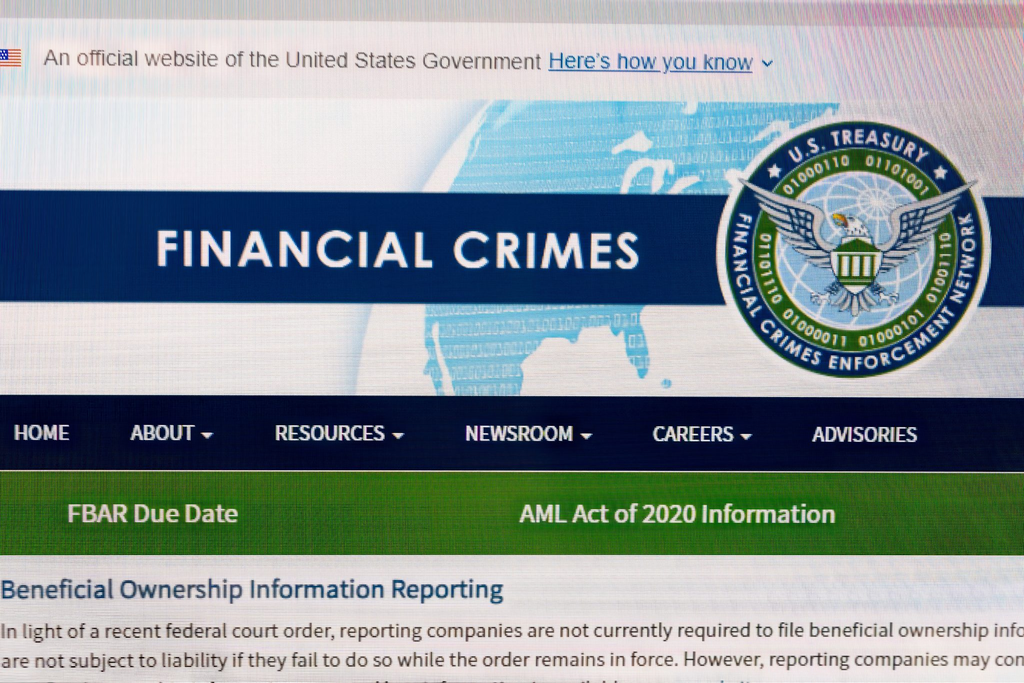
On August 11, the Treasury’s Financial Crimes Enforcement Network (FinCEN) issued a final rule exempting nearly all entities and individuals from reporting requirements under the Corporate Transparency Act (CTA), a landmark anti-money laundering law that requires certain entities to provide basic identifying information to FinCEN about their true owners. Amounting to an unlegislated repeal of the statute, Treasury’s final rule leaves the U.S. virtually alone among developed nations in not requiring basic transparency for anonymous shell companies.
In a statement, FACT co-director Erica Hanichak condemned the rule as “hand(ing) a major victory to U.S. adversaries, corrupt officials, fraudsters, and tax evaders who use our financial system to move and hide illicit wealth.” FACT’s reaction to the release of the final rule was picked up in Axios, Marketplace, Thomson Reuters, and other press outlets.
U.S. Senators Sheldon Whitehouse (D-RI) and Chuck Grassley (R-IA) also condemned Treasury’s move to gut the CTA, saying in a statement that the final rule “undermines the clear intent of the law.” Indeed, the legislative history of the CTA makes it clear that the law was intended to introduce transparency around the “ownership of corporations, limited liability companies, or other similar entities formed under the laws of the States…” Under Treasury’s final rule, all such entities are now exempt from reporting requirements.
In a separate statement, ranking member of the Senate Banking Committee Elizabeth Warren (D-MA) characterized the final rule as “a gift to cartels, criminals, and U.S. adversaries that exploit shell companies to move millions through our financial system,” and called on Treasury Secretary Scott Bessent to withdraw the rule. Senator Warren also noted the long history of support by law enforcement groups for the CTA – including the National District Attorneys Association, the National Narcotic Officers’ Associations’ Coalition, and the United Coalition of Public Safety – as evidence that the decision by Treasury to illegally gut the statute will make Americans less safe.
The United States is under routine evaluation by the Financial Action Task Force, which is expected to approve and publish a report assessing U.S. anti-money laundering standards next month. Beneficial ownership is the stated priority of this round of evaluations and may feature prominently in the U.S. review in light of the final rule.

FACT Research Prompts New Senate Legislation to End Tax Subsidies for Overseas Oil and Gas Drilling
On August 7, ranking member of the Senate Energy and Natural Resources Committee Martin Heinrich (D-NM) introduced the American Energy Independence & Tax Fairness Act, which would eliminate billions of dollars of federal tax subsidies for companies engaged in oil and gas extraction abroad.
In a statement, the senator noted that “Oil majors shouldn’t get a tax break for going overseas to produce energy, but that’s essentially what our current tax policy does…At a time when (they) are making billions in profits per quarter, they can afford to pay their fair share.” Citing FACT research, Heinrich noted that major U.S. oil and gas companies continue to pay substantially more tax abroad than to the U.S., in part due to the sheer size of existing tax subsidies for foreign drilling.
Fossil fuel tax subsidies are also the subject of new analysis from the Tax Law Center at New York University (NYU), which identifies nearly $70 billion in tax subsidies for fossil fuels between 2025 and 2029. Consistent with FACT’s research, the analysis finds that “The largest category of oil and gas subsidies in the tax system comes from the treatment of income from foreign extraction, production, and related activities,” including the complete exemption of foreign oil and gas extraction income (FOGEI) from U.S. tax, and more generous foreign tax credit rules for fossil fuel companies. Per NYU, “The FOGEI exclusion, combined with favorable foreign tax credit dual capacity rules, represents an extraordinary tax subsidy that is available to virtually no other type of income in the tax system.”
FACT in the News

The Economist: The IRS is Going After America Inc’s Overseas Profits
A recent Economist piece on the IRS’s ongoing transfer pricing cases cites FACT’s research showing that major U.S. corporations reduced their tax bills by at least $11.5 billion using offshore tax havens in 2025. Despite repeated IRS budget and staff cuts, the article notes that corporate offshore tax games and the legal disputes they generate are likely to become even more common in the years ahead.
The revenue stakes in the highest-profile cases are enormous: according to the piece, if the IRS prevails in its largest transfer-pricing disputes, it could “claw back roughly $100bn in additional taxes from a small group of firms…That amounts to about a fifth of the total corporate-income tax that the American government collected in 2025.”

Mining.com: Dirty Gold Overtakes Cocaine as Crime’s Cash Machine
FACT’s Julia Yansura was extensively quoted by Mining.com in its coverage of the broad shift among Latin American organized crime groups from primarily relying on the narcotics trade to engaging in a wider array of illegal businesses, including illicit gold mining.
Like all crime, illegal gold mining is financially motivated, and inadequate anti-money laundering systems across the Americas have rendered it a “low risk, high reward” business for organized crime groups. “Governments need to follow not just the gold, but the money,” said Yansura. “That’s how we disrupt the criminal networks behind this trade rather than simply addressing the immediate environmental consequences.”
From Our Members and Allies
Institute on Taxation and Economic Policy (ITEP): How Federal Tax Policy Can Address AI
A new brief from FACT-member ITEP lays out federal tax proposals to respond to the AI boom, organized around three broad approaches: ensuring a fairer distribution of AI’s economic gains; taxing AI’s specific harms (like job displacement and data centers’ energy use); and giving the public a direct ownership stake in AI companies. Among the proposals highlighted are policies to close the loopholes that let corporations shift profits to foreign tax havens, including the FACT-endorsed No Tax Break for Outsourcing Act and Corporate Tax Dodging Prevention Act.
From the brief: “The most important form of corporate tax dodging to be addressed is the use of accounting gimmicks that make profits appear to be earned in countries where they are taxed very little, if at all. Tech companies have long been particularly aggressive in exploiting these offshore tax havens and AI companies will likely follow this pattern if policymakers continue to allow it.”
Institute for Policy Studies (IPS) G20 Watch: The G20 is Heating Up
Read the latest from IPS’s G20 Watch for updates on the meeting of G20 finance ministers in Asheville, NC, resources for advocates, and upcoming events. The selection of Asheville for the location of the finance ministers meeting is especially relevant in the context of the city’s ongoing recovery from the destruction wrought by Hurricane Helene in 2024.
From the update: “Nearly two years after Hurricane Helene, Asheville and surrounding communities have received approval of only $12 billion in state and federal funds to aid in the recovery from a storm that caused $60 billion in damages. As international finance officials arrive to discuss financial (de)regulation and crypto, local organizers are demanding public investment to support people-centered recovery and revitalization.”

Read the latest from FACT co-director Zorka Milin in her role as Roosevelt Fellow, challenging the conventional wisdom that the U.S. must keep corporate tax rates low to remain globally competitive. As Milin explains, what actually makes the United States an attractive place to invest is not rock-bottom corporate tax rates, but the underlying economic and social infrastructure that businesses rely on: access to capital, a skilled workforce, good public infrastructure, and legal and political stability.
And those advantages didn’t appear by accident. As Milin writes: “These structural advantages are themselves largely the product of sustained public investment. Corporate tax is not just a business cost to be minimized but a necessity for funding the essential public goods that are the prerequisite of an attractive investment climate.”
Recent and Upcoming Events

(9/22) Event: From Hidden Wealth to Public Trust – Reclaiming Our Democracy
From the very beginnings of American democracy, taxes have been a battleground for the struggles that have defined America and who counts as “We the People.” Today, a new kind of struggle is underway over whether the wealthiest Americans and the biggest corporations can continue to hide their money and exert political power out of reach of public accountability.

Join the FACT Coalition for a wide-ranging conversation with Vanessa Williamson (Brookings Institution, Urban-Brookings Tax Policy Center) and Casey Michel (Center for International Policy) drawing on their two recent books: Williamson’s The Price of Democracy – The Revolutionary Power of Taxation in American History and Michel’s newly-released United States of Oligarchy – How America’s Wealthiest Ally with Dictators, Weaken the U.S., and Destroy Democracy.
Together, they’ll explore how we got here and the reforms, coalitions, and historical precedents that show that a more transparent and democratic system is both necessary and achievable. Other speakers will include Sarah Pray, executive director of Better Taxes for a Better America, and FACT co-director Zorka Milin.
RSVP to attend in person in Washington D.C. or online on Zoom. Hors d’oeuvres and refreshments will be provided from 4:30-6:00pm for in-person attendees.
RSVP to join FACT for a conversation with leading experts exploring the nexus between financial crimes laws, environmental crime, and climate change in New York City on September 24. This in-person-only panel discussion is co-organized with The Sentry and the Center for Climate Crime Analysis (CCCA) and hosted by New York University School of Professional Studies Center for Global Affairs.
2026 Regional Summit on Security and Justice
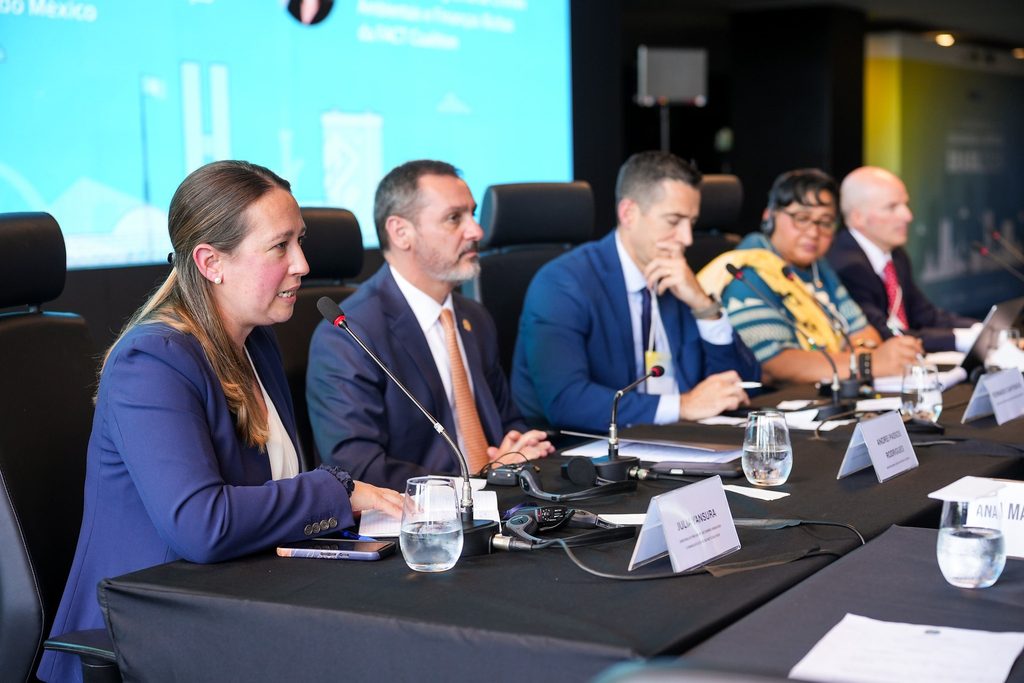
From August 5-6, FACT’s Julia Yansura attended the 2026 Regional Summit on Security and Justice in Brasilia, Brazil, where she participated in a panel on efforts to combat organized crime alongside authorities from 23 countries in the region.
Yansura’s remarks focused on the increasingly important role that environmental crimes like illegal gold mining play among organized criminal groups in the Western Hemisphere. Effectively addressing these crimes requires more than just enforcement operations at mining sites; it requires law enforcement to follow the money associated with illegal mining in order to identify, disrupt, and ultimately deprive these networks of their illicit wealth.
About the FACT Coalition